 ATRIUM
Define a topic, city context, duration and capacity.
NONE → DISCOVER
ATRIUM / Rooms / Virtual Atrium
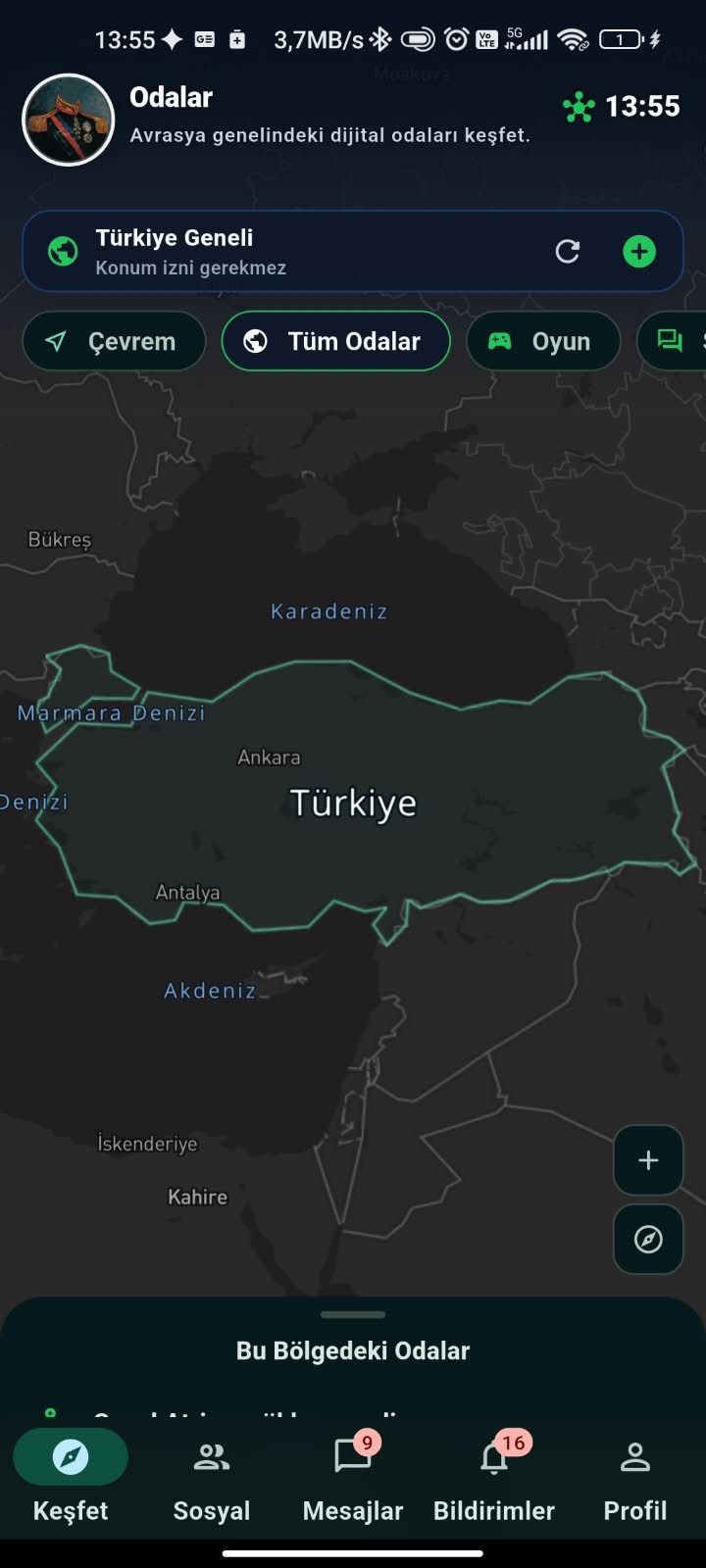
Rooms create a digital meeting context around gaming, technology, music and hobbies. They complement local discovery: a shared topic can bring people together without requiring the same street, and offer a starting point for an ongoing connection.
Working MVP · Preparing for controlled beta
CONTROL THE SCENARIO
Illustrative flow · No live users or transactions.
Define a topic, city context, duration and capacity.
NONE → DISCOVER
01
Atrium starts with local life, but not every interest has a large audience within walking distance. People who enjoy a niche game, technology or hobby may share it across cities. Rooms make space for this digital connection without removing local discovery from the product.
Virtual Atrium is more than a chat button attached to a map. A room has a topic, city context, duration, capacity and participation relationship. Understanding its purpose and joining process comes before entering a conversation. The map supports discovery; the shared interest provides the reason to gather.
02
The source includes cities, category filters and viewport-based discovery. A room is not necessarily a physical meeting address. A city can provide social context while the map explores a wider area. Connecting digital interests across Türkiye does not imply an unrestricted recommendation system that ignores geography.
Someone unable to find enough players locally may be interested in a room associated with another city. Music or education can create similar connections. Exact discovery boundaries depend on server rules in the relevant version. The product story combines the existing city/category model with the broader aim of connecting shared interests.
03
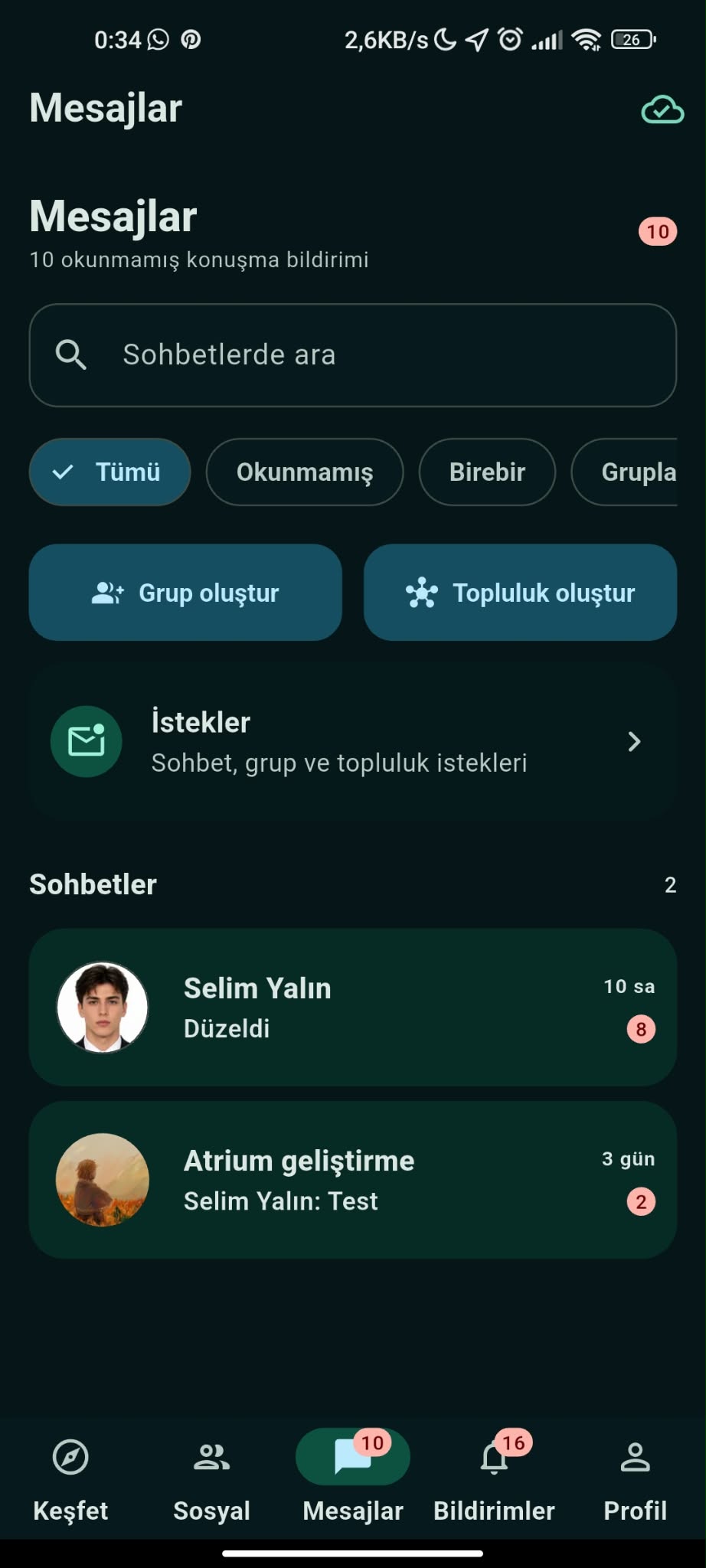
The model includes general, technology, gaming, events, anime and manga, sport, music, career, education and social categories. Discovery offers filters such as all rooms, gaming, chat, events and music. Categories help organize discovery, while descriptions explain what makes an individual room different.
A gaming room's title may name a game; its description should explain the intended gathering. Meeting beginners, discussing a topic and arranging a short digital session create different expectations. Understanding these before joining is a design goal, not a guarantee of a perfect match.
04
Creating a room starts with a title, description, category, city context, duration and maximum participants. The client converts duration to a UTC expiry time for the server. These fields establish purpose and boundaries. This page does not promise fixed duration or capacity options; UI and server validation must be considered together.
A useful room description explains participation rather than providing a slogan. It should make the topic and intended audience understandable without requiring a private address or unnecessary personal information. Creating a room also involves managing requests and its lifecycle, not merely adding a marker.
05
Membership states distinguish none, pending, member and owner. Discovering a room does not automatically make someone a member. A joining request can be accepted or rejected by the owner. The web scenario explains this boundary without sending a real request.
A pending request does not guarantee acceptance or rejection. People should understand the current state. Source code includes navigation into room chat after acceptance. Access changes need server enforcement; participation status also defines access to the conversation.
06
Direct messaging supports communication between two people. A community can sustain membership, management and recurring activities. A room frames a digital gathering around a topic and duration. These modules complement one another while serving different needs.
Navigation to room chat does not establish voice or live video support. No RTC flow confirming those capabilities was found in the inspected source. This page does not promise voice rooms, screen sharing or game-server integration. Any future work should be described separately.
07
People may meet around a game and continue a connection later. Participants in the same city might consider a public event; people in different cities may value a digital relationship. Rooms should not force every conversation into an in-person meeting. Meaningful, safe connection is the relevant question.
The connection to real life is a possibility rather than a measured outcome. Joining an event, building a community and visiting a venue are separate choices and measurements. The 117-person early study describes qualitative feedback, not active room users or market validation.
08
Room states include active, closed and expired. Closing a room and listing history are supported in the repository. These distinctions help prevent old rooms appearing indefinitely current. Expiry, availability and membership are separate pieces of information.
Managing joining requests does not solve every behavioural or content safety issue. Rules, communication controls and reporting belong to the broader trust approach. Existing acceptance, rejection and closing flows are not described as a complete moderation console; pilot operations require further evaluation.
09
The early 117-person Rooms study highlighted shared digital interests, finding similar people and the risk of empty rooms. Interest is a useful starting signal, but it does not prove repeat participation, group safety or sufficient density. Methods, counts and limitations remain available on the research page.
Next questions include how a room finds its first participants, whether joining is understandable, whether a topic starts conversation and whether people return. These are learning goals, not result graphs. Contact is available to discuss a room pilot for a game, hobby or community.
10
Imagine someone enjoying a game without nearby companions. They explore gaming rooms and review purpose, city context, participation, capacity and expiry before requesting to join. Chat after acceptance supports expectations; it does not run the game or automatically connect to a game server.
Beginners and experienced players may seek different experiences. A clear description and conversation help establish expectations. A full room does not prove satisfaction or repeat use; the quality of participation matters alongside avoiding empty rooms.
11
Music or technology topics may interest people in different cities. A room can end with its expiry, or a connection may later continue in another community or conversation. Physical meetings are optional. Rooms complement a hyperlocal product by allowing interests at different distances to connect with local life where appropriate.
Participants in one city might consider a relevant public event, while others remain connected digitally. These are different possible outcomes, not one compulsory definition of success. The scenario explains relationships between modules rather than recording an actual Atrium user story.
12
Creation includes a useful description, suitable category and city, and duration and capacity that fit the purpose. Reviewing requests is part of that frame. Accepting one person is not the same as opening unlimited access. Clear pending, member and owner states support understandable management.
Closed or expired rooms should not appear as active invitations. The model separates start, expiry and closing information, while history carries duration and participation context. Reading this lifecycle is part of the product experience beyond initial discovery.
13
Ask about purpose, participation and time: what is the topic, what does joining require, what is my state, and how long is the room open? These explain more than a marker alone without requiring another person's private location.
You do not need to request every room. Repeating an action does not create a relationship or guarantee a request result. Clear state information and personal boundaries matter, and future learning can improve places where people become confused.
ABOUT THIS MODULE
Voice rooms or an RTC flow were not confirmed in the inspected MVP source. This page describes rooms and chat without promising voice calls.
The current model separates joining requests and owner acceptance or rejection. Discovery is not membership.
That number refers to early qualitative research participants, not active users.
THE NEXT STEP
Working MVP · Preparing for controlled beta · Contact us about participation and collaboration.