 ATRIUM
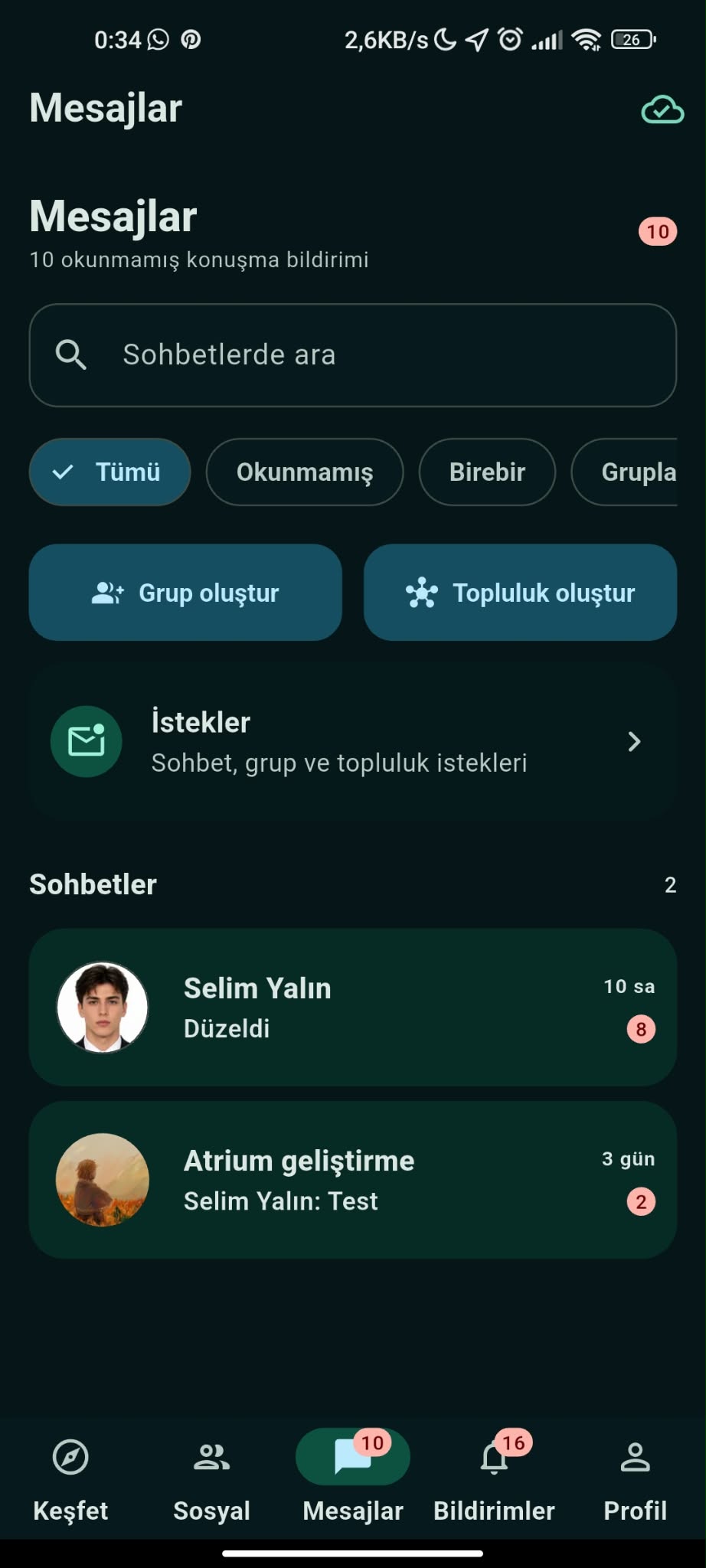
Discover a circle through interests and local context.
ATRIUM / Communities
Meet once. Find a reason to come together again.
Communities connect discovery, membership, communication and events around recurring interests. Understand what a walking group, book club or hobby circle does, and find a starting point that suits you.
Working MVP · Preparing for controlled beta
CONTROL THE SCENARIO
From a beginning to the next step.
Illustrative flow · No live users or transactions.
11 sections in this guide
01
More than a membership count.
A community's value is not explained by member counts alone. Purpose, an understandable first step and reasons to return matter more. Atrium treats discovery as a beginning, followed by membership, communication and activities that sustain the connection.
Groups can express the same interest differently: in-person book discussions, online conversation or walks at different paces. People should understand these differences through descriptions and activities, rather than infer them from a title. The product helps explain options instead of prescribing one ideal group.
02
Local discovery can reveal circles you did not know existed.
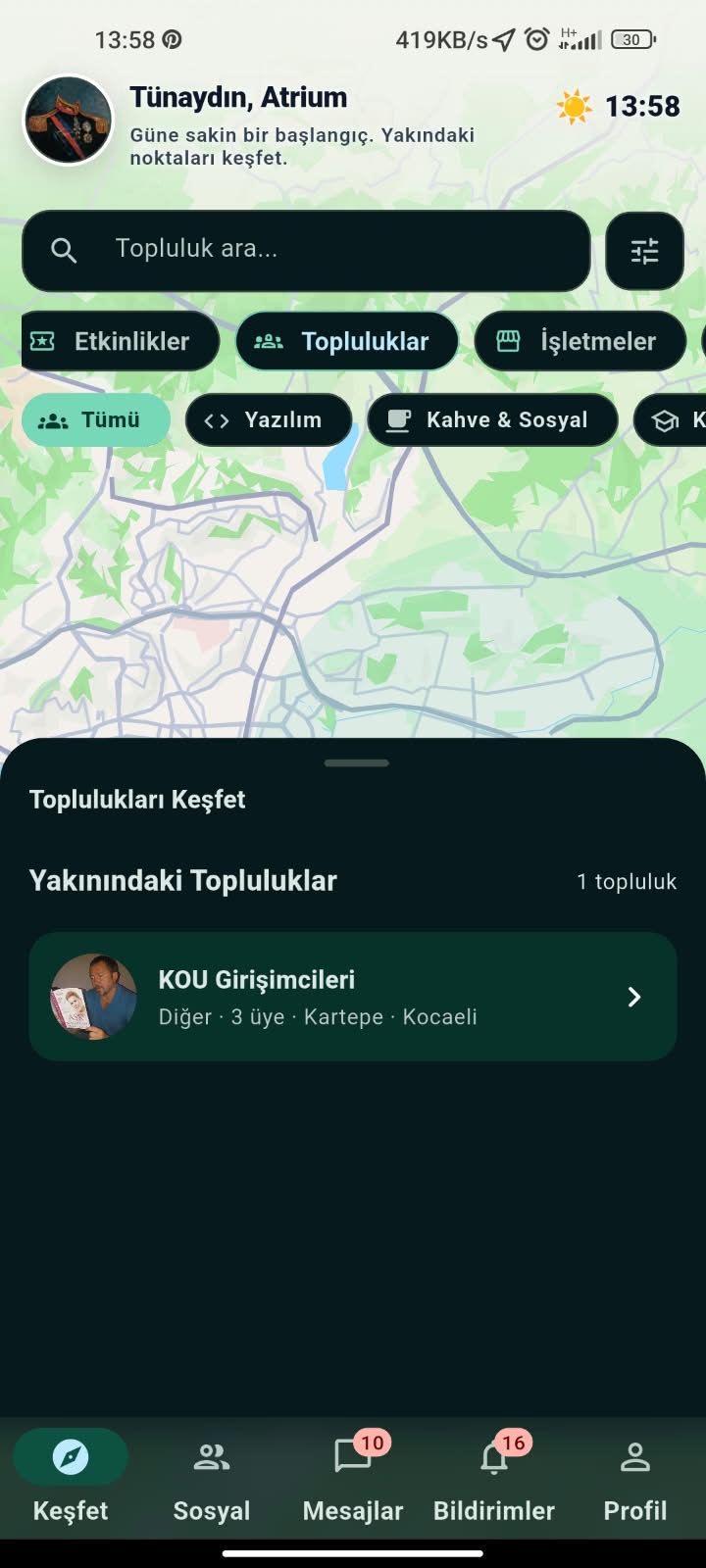
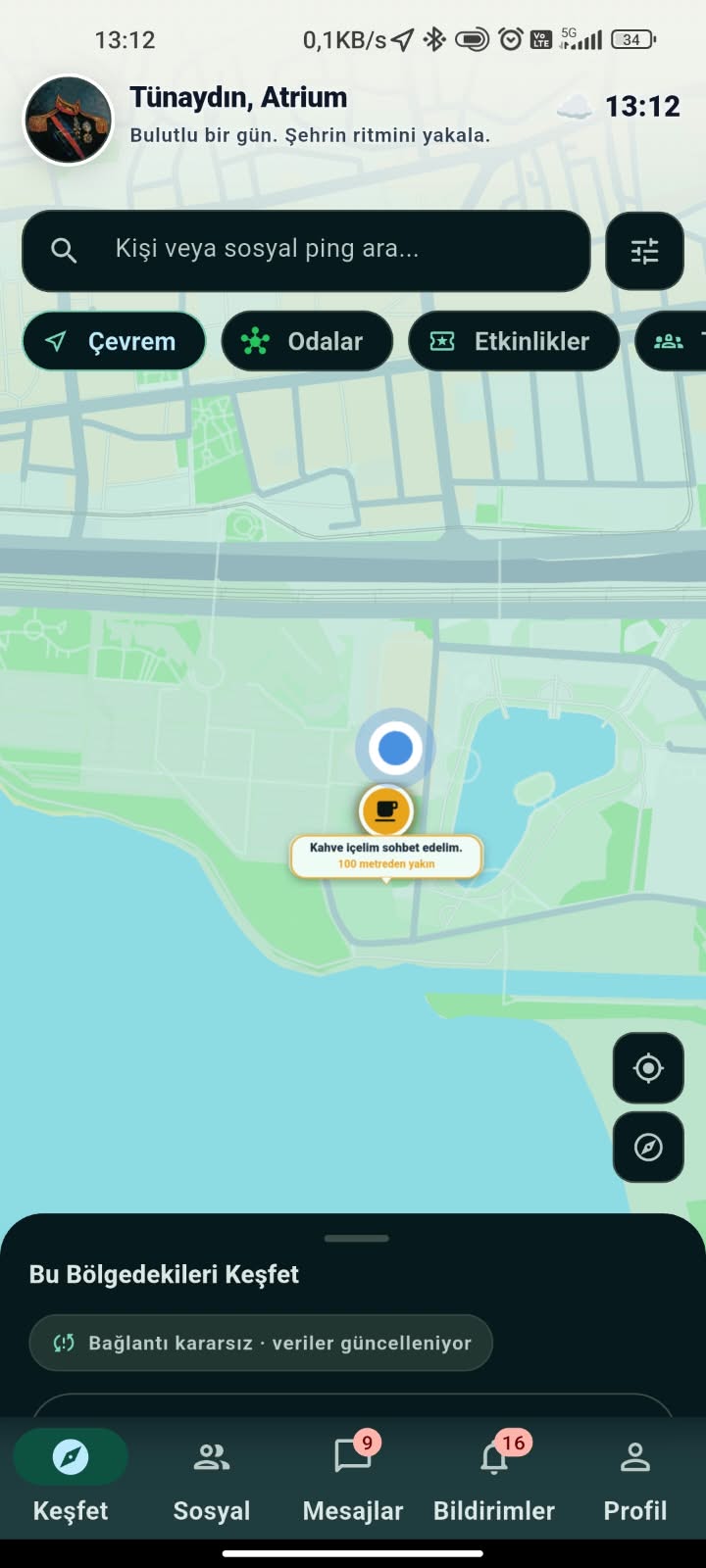
A nearby group can remain invisible across scattered posts, message groups and noticeboards. Connecting Nearby and Communities aims to make shared interests discoverable locally. Discovery can help both prospective members and organizers reaching relevant people.
Usefulness depends on local density. Many scattered records do not prove useful options in a particular area. The micro-region approach tests contexts where groups are active and people may return, without presenting demo communities as real growth evidence.
03
Joining, invitations and membership are different steps.
The source includes members, invitation candidates, creating invitations, pending invitations and accepting or rejecting them. Participation involves more than one button. Discovering a group and becoming an accepted member should not imply identical permissions.
An invitation does not create an obligation. People may decline or later leave; source includes leaving and communication settings. A good experience supports control over the ongoing relationship as well as entry. This web scenario does not send invitations or create memberships.
04
Management is more than greater visibility.
Creating, editing, reviewing members, assigning roles and member management are separate operations in source. A public introduction and a management workspace are different experiences. Manager permissions should not automatically extend to ordinary members and need server-side enforcement.
Organizers still need clear rules and expectations. Tools can structure this work without automating every social decision. Recurring activities, communication and handling concerns require people. The organizer guide explores preparation, participation and continuity separately.
05
An event can be a community's open door.
Someone may prefer to review an activity before joining a group. A concrete time and place offers a starting point. Communities explain ongoing purpose; events explain a particular plan. The relationship should remain clear rather than collapsing both into one generic card.
Ongoing communication and future activities may support continuity, but that remains a pilot question. Creating an event does not prove attendance, and membership does not prove lasting engagement. Separate measurements help explain the actual experience without inflated growth claims.
06
Looking beyond a book club's first gathering.
Imagine discovering a book club, understanding its approach, reviewing a suitable event and following the relevant joining process. After a first meeting, community conversation can support the next book. Discovery, events and chat serve different moments of the same relationship.
Walking or board-game groups can establish different rhythms. The product need not impose one schedule or joining model. These illustrative examples explain a possible longer journey without claiming completed Atrium gatherings.
07
Shared interests still need boundaries.
Joining a community does not grant access to everyone's private information or imply permission for every direct conversation. Membership roles, communication spaces and profile visibility are separate. Blocking, preferences and rules belong to the broader trust approach.
Existing modules provide a starting point, while sustainable community operation needs responsibilities and processes. A pilot should discuss purpose, management, activities and handling concerns. Opening an interface does not create a community by itself; the roles need a realistic local context.
08
The first week: different ways to understand a group.
A description is one beginning, followed by activities, joining conditions and communication context. You need not take an active role immediately. Reviewing an event or learning conditions is also progress. The product should not force a membership decision before explaining the group.
Organizers need to consider introductions, contact routes and rules alongside technical membership. Tools can make information accessible, while welcoming people and setting expectations remain human responsibilities.
09
A book club: from membership to a shared rhythm.
A book club needs a discussion approach and rhythm as well as a title. An introduction, event and ongoing community conversation can support successive steps. Membership alone does not create continuity.
Participation intensity can differ, and management needs to consider that. This illustrative club is not a claim of verified recurring Atrium gatherings. It explains product relationships and gives organizers a concrete context to consider.
10
Members, managers and invitees have different relationships.
A viewer may not be a member; an invitee may not have decided; a manager has further responsibilities. Clear distinctions support expectations and authorization. A visible action is not sufficient permission and requires server enforcement.
Role changes and leaving require appropriate access updates and application tests. This website explains existing operations and links to trust guidance without claiming a fresh end-to-end audit of every case.
11
Sustaining a local circle.
Visibility and ongoing life differ. Activities, current information, responses and purpose need stewardship. Atrium connects discovery, events and communication, but cannot promise automatic growth or removal of every management task. Pilots should learn the actual rhythm and gaps.
Understanding a few real contexts may teach more than creating many empty profiles. Reach, understandable joining and repeat gatherings are separate questions that should inform product improvement and expansion.
ABOUT THIS MODULE
A few useful answers.
How is a community different from a room?
A community supports ongoing membership and activity; a room frames a digital gathering with a topic, duration and participation context.
Can I discuss a pilot for my existing group?
Yes. Review the organizer guide and use contact to describe your group's context.
THE NEXT STEP
Be part of the life around you.
Start a connectionWorking MVP · Preparing for controlled beta · Contact us about participation and collaboration.