 ATRIUM
Express a social intention such as a walk or coffee.
ATRIUM / Ping
A small intention. Something you could start together.
A Ping expresses what someone is open to, beyond who they are on a profile. Create a starting context for a coffee break, walk or shared hobby without preparing a formal event.
Working MVP · Preparing for controlled beta
CONTROL THE SCENARIO
From a beginning to the next step.
Illustrative flow · No live users or transactions.
11 sections in this guide
01
A profile describes you; a Ping describes an intention.
A profile can describe interests, but a permanent description does not explain wanting a walk today or a gaming companion this evening. Ping makes this difference in time and context discoverable. It offers a reason to begin rather than encouraging the same unsolicited message to everyone.
The focus is the first sentence. A stated activity can help another person understand what a conversation might be about. Shared interest still does not replace mutual agreement. A Ping creates a possibility of contact, not a guaranteed reply, friendship or meeting.
02
Not every small plan needs an event.
An event provides a structured frame: date, place, organizer and participation conditions. A Ping is a lighter starting point for social intent. Hosting a workshop and being open to coffee should not require the same flow. Understanding the distinction helps people choose the right module.
An intention can become a more definite plan after people communicate and compare availability. A larger or recurring activity may belong in Events or Communities. Ping complements these modules at an earlier stage. This does not imply an automatic conversion-to-event feature.
03
How could “a coffee break?” unfold?
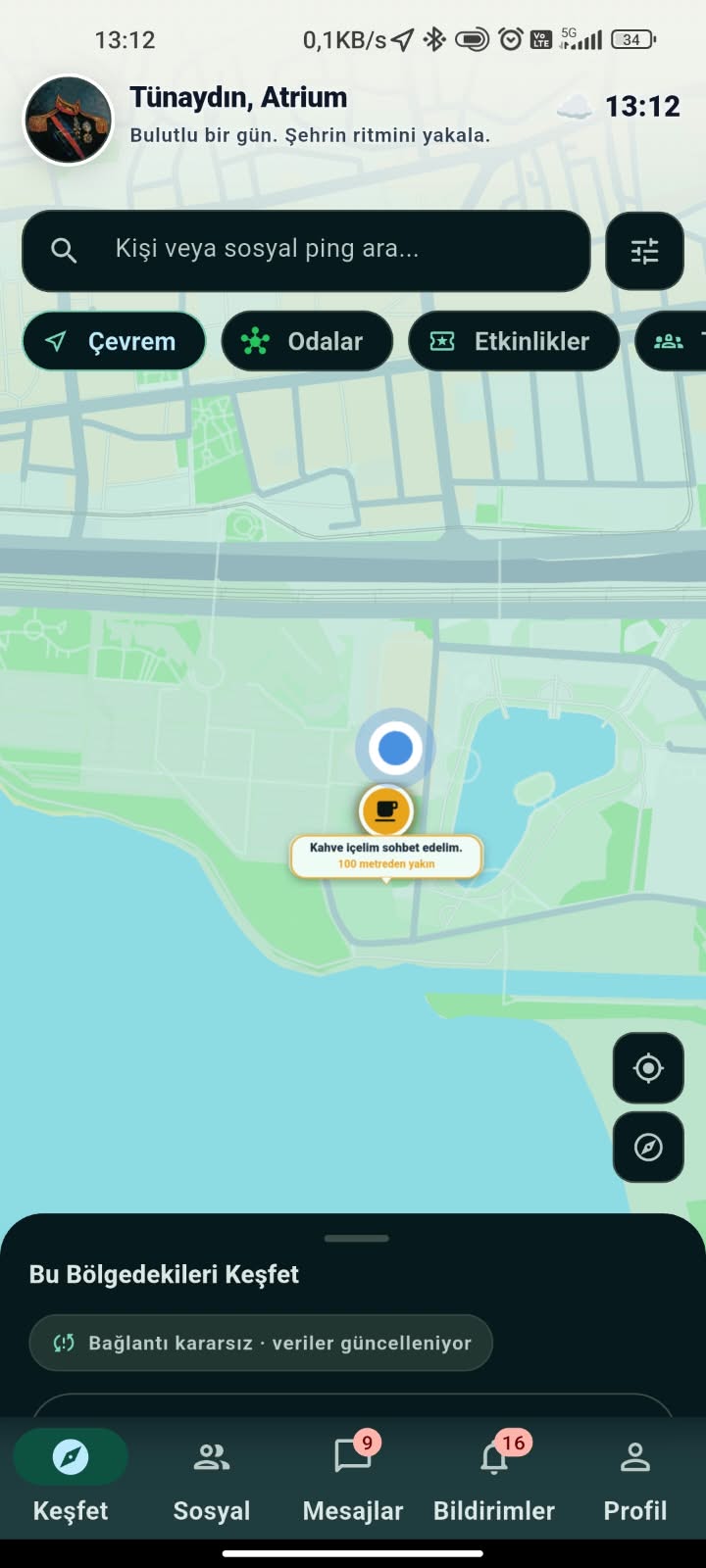
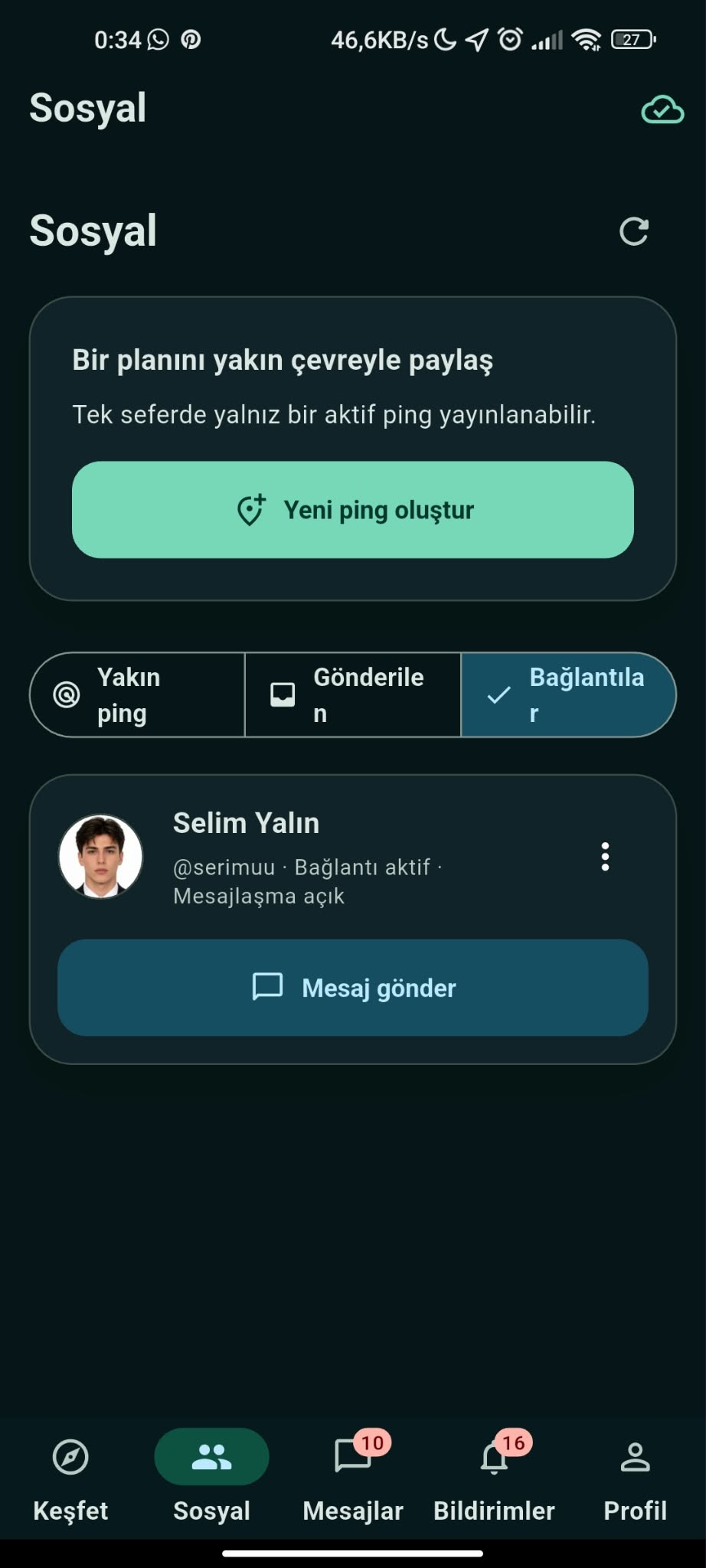
Imagine someone expressing interest in a nearby coffee break. Another person reviews the intention and profile context. Location alone is not enough: availability, interest and communication preferences also matter. If both want to continue, a conversation provides space for details.
Choosing a public, accessible venue can connect the journey to business discovery. Ping does not make a reservation or prove a visit. The illustrative steps explain how intent, discovery, communication and venue information relate; they do not publish a live user's request.
04
From a walk to a shared hobby, make the context clear.
A walk, photography practice, an exhibition or a conversation about a digital interest imply different expectations. A useful intention explains the kind of interaction being considered. Clarity also helps people recognize situations they do not want to join.
Ping is not the answer to every social need. Rooms can support a digital gathering, Communities a lasting hobby circle and Events a scheduled activity. Showing these boundaries helps visitors reach the right tool rather than hiding product depth.
05
Social intent has a time context.
An intention from today may be misleading weeks later. Time and freshness play a more prominent role than in a profile. The interface should avoid creating new expectations from outdated intentions. This page does not promise a fixed expiry duration; exact behaviour belongs to the relevant application version and server rules.
Visibility is also distinct from content. Who sees an intention and how contact proceeds relate to user control. Unverified location or visibility controls should not be described as completed features. Controlled beta should examine whether people understand the consequences of their choices.
06
Seeing an intention does not create a right to contact.
Being open to an activity is not consent to every form of contact. An intention has a context and boundaries can change. Not replying or ending a conversation are ordinary user choices. The product should not describe a connection as established before both people agree.
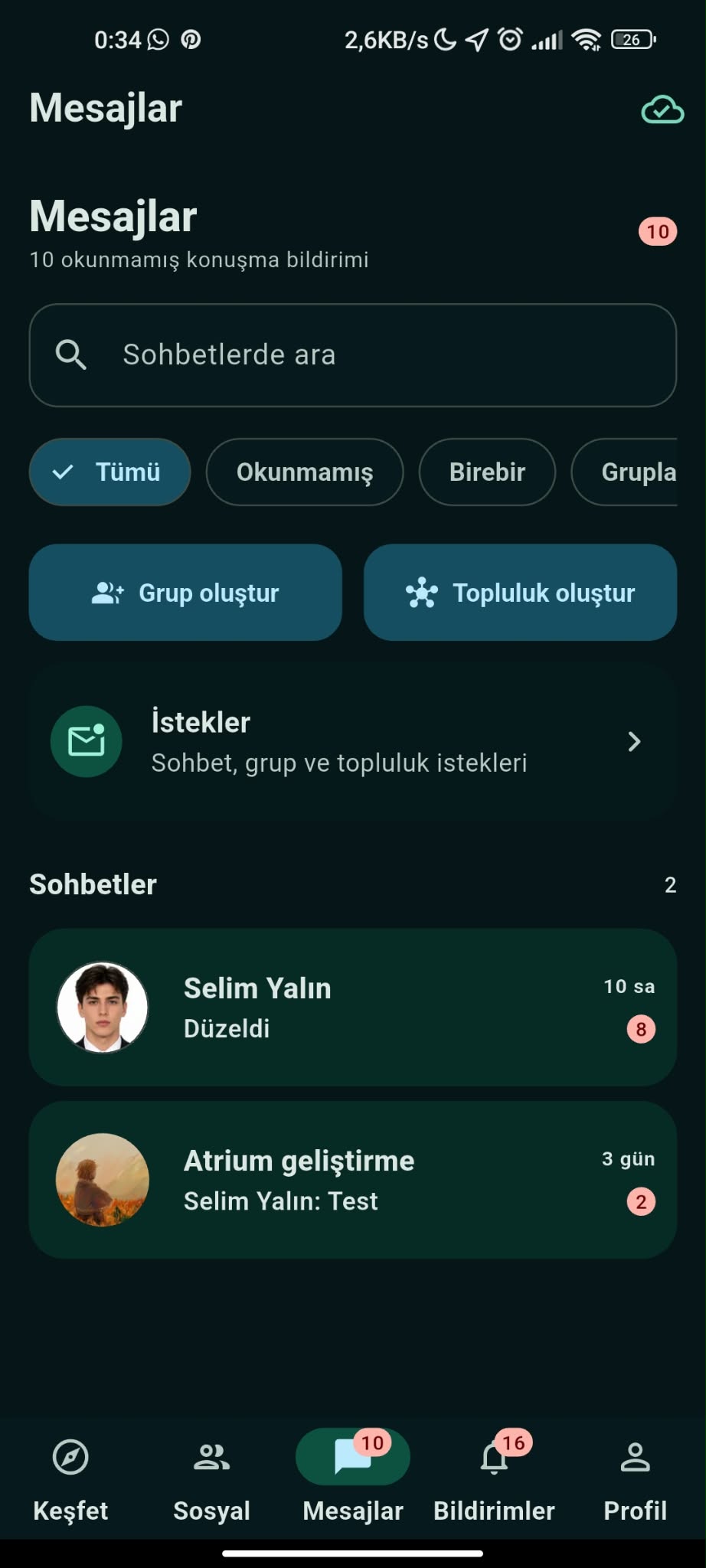
Messaging code includes blocking and conversation preferences. These do not solve every safety issue around in-person meetings. Atrium Trust treats sharing personal information, location and meeting in person as separate decisions. Simply learning about an intention is also a valid outcome.
07
What does the current MVP show?
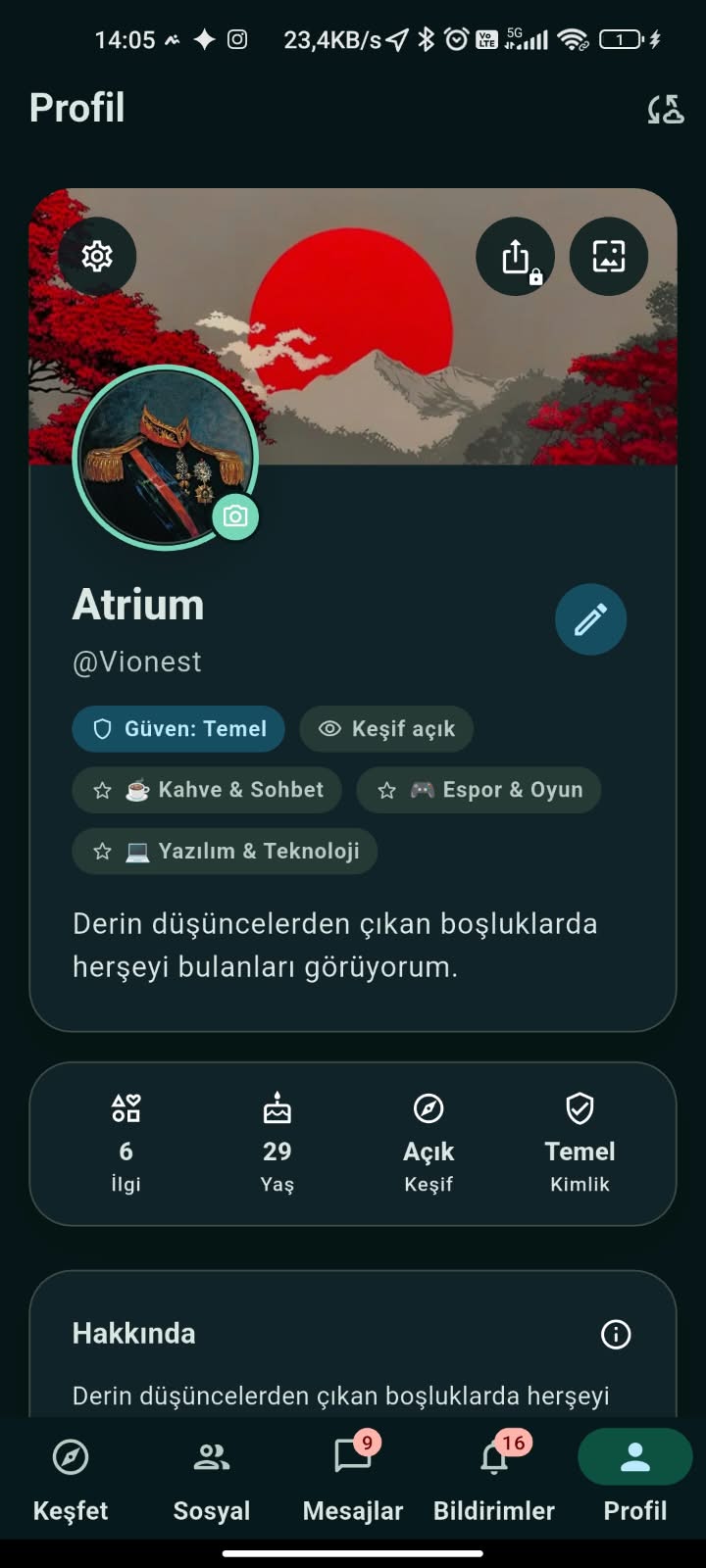
Social discovery and map context appear in the real MVP captures. Profiles, markers and messages in those captures are demo content, not active user counts or completed meetings. The complete discovery-to-communication chain requires separate device and server validation.
Development focuses on understandable intentions, freshness, unwanted contact and useful transitions between modules. A pilot can examine which contexts help people and where they leave. No conversion rates or success graphs are claimed; contact is available for discussing the demo or a pilot.
08
A walk: a small but understandable intention.
A short walk need not be an organized event. Someone can express an intention; another person reviews whether it suits them. Time and a public meeting context can be discussed if both agree. Merely seeing a marker does not establish shared intent, and either person may stop.
Ping provides the initial context rather than managing the entire outing. Recurring walks may suit a community; structured conditions may suit an event. Clear transitions help people use the right tool at the right stage.
09
A shared hobby: turn vague curiosity into a topic.
A photography enthusiast may want to meet others nearby. A profile can carry the lasting interest while a Ping expresses being open to a conversation or activity now. Shared enthusiasm alone is not enough; willingness to engage in that context matters too.
Clarity need not maximize reach. A specific explanation can reduce mismatched expectations. Talking about an interest, considering an event and simply learning about an area are valid possibilities rather than automatic friendships or meetings.
10
What makes an intention understandable?
Activity type, context and communication expectations provide a useful beginning. Coffee and a gaming conversation need different explanations. Private addresses, phone numbers and schedules are not requirements for expressing intent; each later disclosure is a separate choice.
An extra sentence can help when expectations are unclear, without turning a Ping into a formal event notice. Balancing a lightweight beginning with sufficient context is a product question that pilot feedback can inform.
11
Ping, Event or Room?
A Ping suits a small current intention; Events provide structured time and place; Rooms frame a topic-based digital gathering; Communities support continuity. Separate guides let visitors investigate their need instead of returning to a generic overview.
Needs can evolve: a conversation may lead to an activity or a community relationship may continue elsewhere. What matters is understanding each stage. Website links explain these paths without creating hidden memberships, messages or events.
ABOUT THIS MODULE
A few useful answers.
Is Ping a dating feature?
This experience focuses on social intentions and shared activities such as coffee, walks and hobbies. Romantic intent is not assumed.
Does creating a Ping confirm a meeting?
No. Discovery, mutual communication and physical attendance are separate stages.
THE NEXT STEP
Be part of the life around you.
Start a connectionWorking MVP · Preparing for controlled beta · Contact us about participation and collaboration.