Atrium is about more than dots on a screen: people and possibilities discovering one another in a useful context. Choosing to meet remains a personal decision.
A CAFÉ’S STORY
From a point on the map to a neighbourhood gathering.
01 / 03 INSIDE THE PRODUCT
Real MVP screens · Demo content01
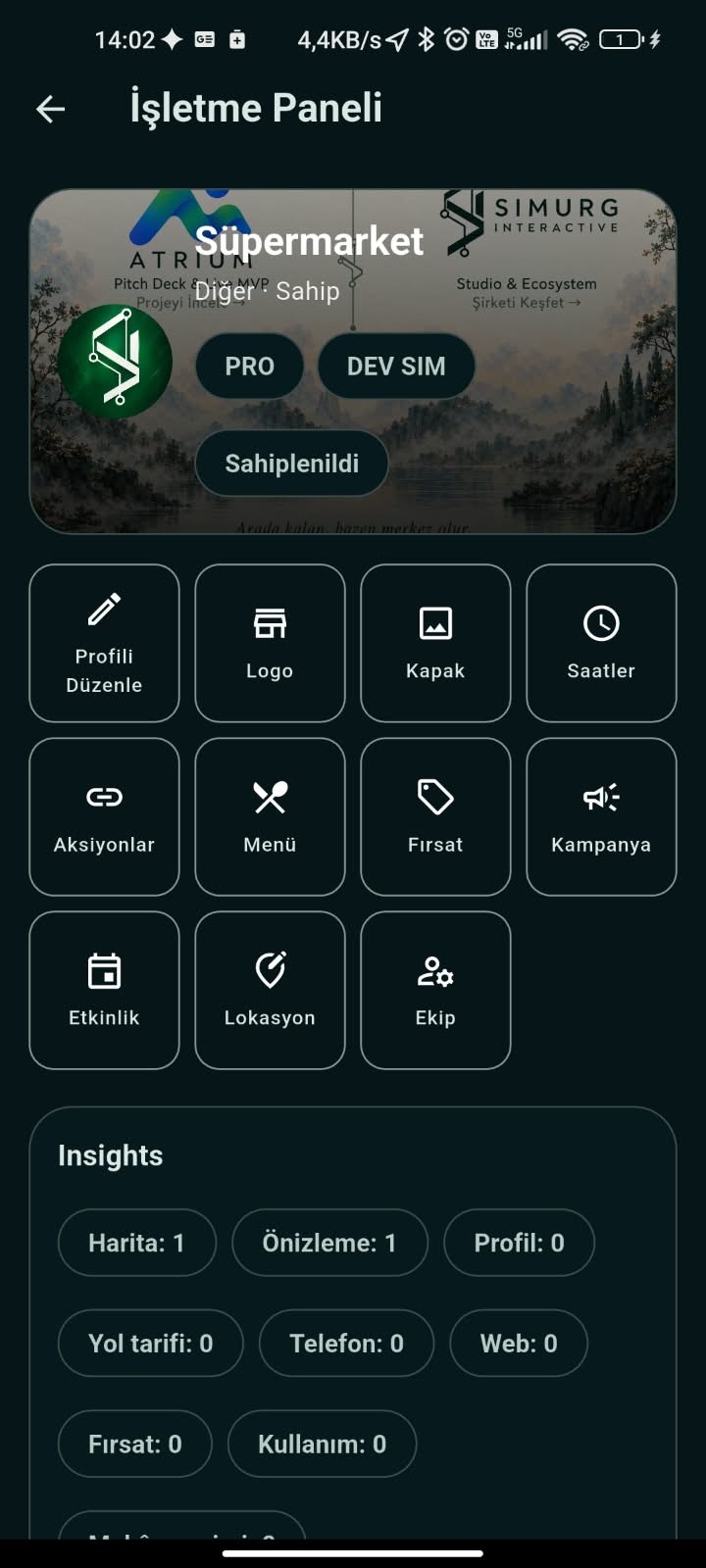
Keep your profile, hours and menu together.
Explain what the café offers, its hours and suitable gathering contexts. Menu, services and venue information may help decisions. The workspace supports this information while keeping it current remains part of operations.
02
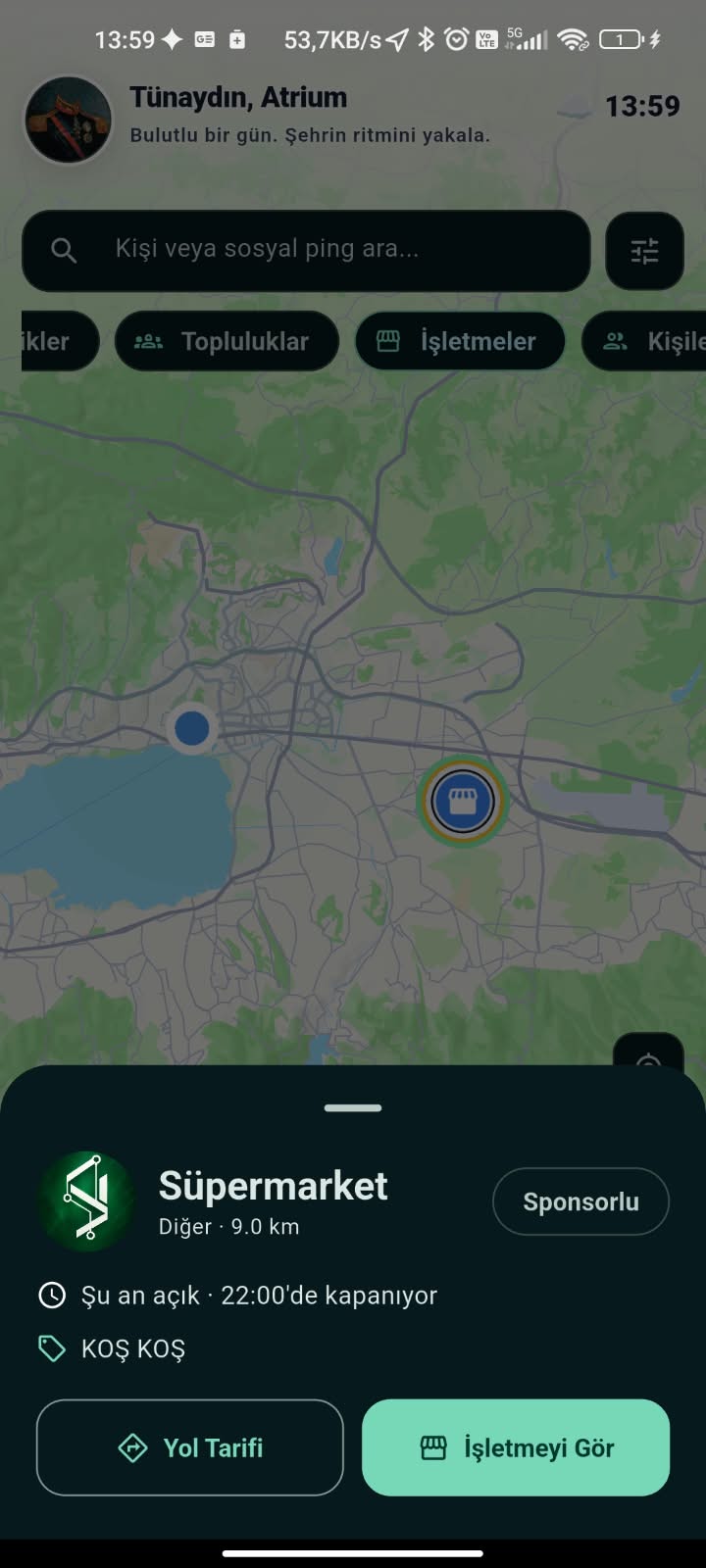
In the Courtyard Coffee scenario, someone finds the business on the map and explores its profile.
Someone can review the venue on its own or in an activity context. A profile should provide useful information at that moment. Pilot learning needs to examine discovery and the business's expected value together.
03
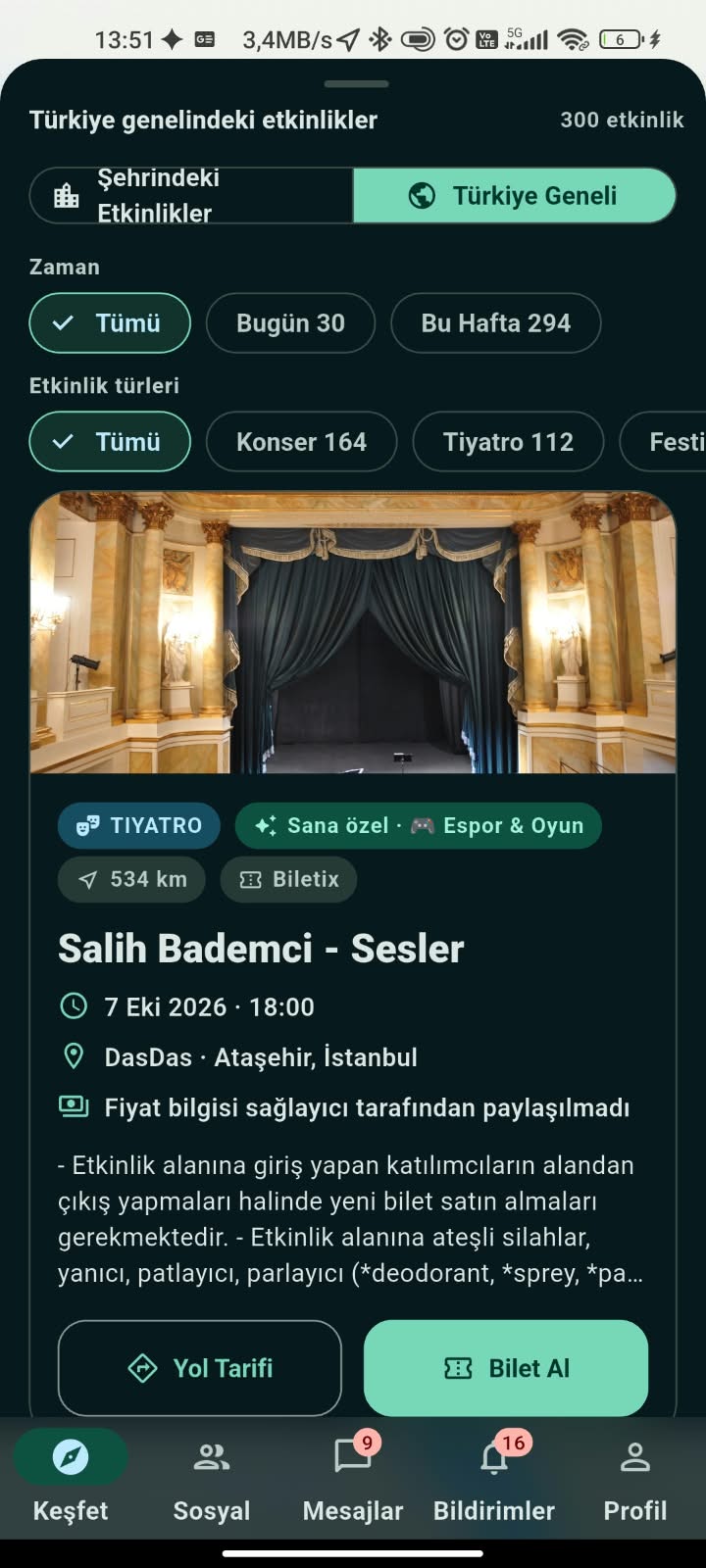
Connect your venue’s event to discovery, with details and directions for visitors.
Directions are a possible next action, not a visit or purchase record. Learning which interactions matter to a business is separate. Privacy-conscious insights should explain suitable aggregate information rather than track individuals.
Courtyard Coffee is an illustrative product scenario.
ATRIUM BUSINESS
Information up to date.
Your story, closer.
A venue profile, address, opening hours and menu/catalogue. The working business MVP establishes the foundations of local discovery. Campaigns, advanced promotion and aggregated insights are further development areas.
01
Business Free
Be present in Atrium.
Business profile, address, opening hours, menu/catalogue and basic visibility.
Current MVP02
Business Plus
Activate your nearby audience.
Local offers, events, advanced CTAs and stronger community interaction tools.
Planned03
Business Pro
Measure and optimise physical conversion.
Advanced hyperlocal campaigns, privacy-safe performance measurement and physical action analytics.
Planned
Package structure may change based on beta and pilot findings.
Explore the business approach in detail11 sections in this guide
01
Your doors may be open. Does the right local audience know?
Being visible online is different from entering someone's actual plan. A café may appear in search while missing a nearby book group's needs. Atrium Business aims to place venues alongside local people, events and communities, offering relevant information at a decision moment rather than promising impressions alone.
This is not a sales guarantee. A pilot should learn which information helps customers and which interactions businesses value, considering venue type, neighbourhood and operating capacity. A café and an appointment-based workshop may need different things.
02
A profile introduces the venue; a workspace supports the work.
MVP captures include a business profile and workspace. Address, hours, menu/catalogue and services help people understand a venue. The workspace brings this information together so discovery can lead to a practical next step. Keeping it current remains connected to business operations.
A visible tool label does not prove a complete commercial workflow. Campaigns, advanced promotion and insights need current/planned distinctions. Simulation counters are not customer or revenue results. A pilot should agree on usable scope and observable outcomes beforehand.
03
Courtyard Coffee: how discovery could unfold.
Imagine a café with current hours, a menu and room for small groups. Someone discovers it in Nearby, reviews the profile and perhaps considers a local book gathering. Profile information and event details inform a decision; opening directions is still not a purchase or verified visit.
The journey illustrates why hours and clear services may matter, without claiming a completed visit. Actual value needs evaluation against a business's goals and privacy boundaries during a pilot.
04
Hosting a community is different from placing an advertisement.
A café, workshop or local venue can provide a meeting environment. The business explains facilities; the organizer defines time, purpose and conditions. Their relationship does not imply automatic reservations, guaranteed occupancy or an Atrium-run event.
A useful pilot starts with something a venue can realistically support, such as a suitable book gathering or workshop introduction. This makes the product's contribution easier to examine. Context and information quality matter more than sending every community to every business.
05
How should Free / Plus / Pro be understood?
Plans express a scope approach for different needs: core presence, broader local promotion and more extensive tools or insights. Planned features remain labelled. Names do not imply finalized pricing, contracts, payment processing or active subscriptions.
The right question is which task becomes easier: keeping a profile current, presenting an activity or reaching relevant discovery contexts. Choosing a concrete pilot purpose avoids unnecessary scope expectations. Willingness to pay remains a question to research.
06
Understanding value should not require tracking customers.
Businesses may want to understand interest, but aggregated interactions differ from tracking an individual's movements. Planned insights need clear explanations. Map views, profile opens, communication and visits should not be collapsed into the same outcome.
Simulation values are not a substitute for that distinction. A pilot must establish what is collected, who can access it and how it is reported. Technical research and a finished commercial analytics product remain separate.
07
Make your local profile useful at decision time.
Someone considering a nearby venue needs more than its name: whether it is open, what it offers and how to reach it. The business profile aims to make descriptions, location, hours and menus a consistent starting point. Accurate, current information comes before visibility.
The MVP includes business and workspace screens for day-to-day information management. They do not imply every service is publicly available or paid. Having the correct account represent a business or location is also part of the experience.
08
Put a campaign in a relevant context.
A workshop using a quiet day for a community gathering or a café sharing an open event are illustrative scenarios. The aim is to explore whether place, time and interest create relevance instead of showing the same promotion to everyone. These are not customer success stories.
Local promotion needs evaluation alongside clear identification of commercial content and user control. Sponsored reach should not grant access to personal movement histories; payment should not confer social trust or administrative authority.
09
Learn more than an impression count.
Profile views, direction requests, campaign interest and actual visits are different measurements. A useful dashboard needs event definitions, time periods and clear treatment of repeated actions. A workspace filled with test data cannot be presented as a business result.
The pilot approach is to learn which information businesses actually use and which tools reduce work. Aggregate insights are preferred, with separate consideration of re-identification in small groups. Commercial usefulness and privacy need to be designed together.
10
Free / Plus / Pro: a scope framework.
Separating basic presence management from advanced operations and promotion creates a possible framework for different business needs. Feature allocation, prices and limits should not be finalized before learning from actual usage and costs. This website does not offer an active subscription checkout.
Pilot conversations begin with the tools you use today, where you lose time and which outcome matters. The approach starts with a concrete question: which small task could we help you do better?
11
How would a business pilot work?
First we clarify the business type and local use case. Then we aim to learn through current profile information, a bounded activity or campaign and a jointly defined evaluation period. Data scope, operating expectations and feedback channels should be discussed at the start.
Interest in a pilot does not guarantee acceptance or access on a particular date. Describing your business and the need you want to address in the contact form helps make the conversation concrete. We can define an appropriate scope together.
COMMON QUESTIONS
Clarity for your business.
What can my business prepare today?
Prepare an accurate address, current hours, menu or services and venue context. A pilot discussion should establish usable scope. Existing interfaces do not mean public commercial access has started.
Are customers or sales guaranteed?
No. The aim is useful discovery and information. Views, directions and visits are different outcomes, and pilot value needs evaluation against a concrete business purpose.
Are payments being taken for Free / Plus / Pro?
This page describes scope rather than finalized pricing or active subscriptions. Existing and planned tools remain distinct; a plan name does not imply every tool is currently available.
Must I work with a community?
No. Presenting useful venue information can be its own use case. Communities or activities add context where suitable; capacity, operating style and expectations should shape pilot scope.
 ATRIUM