 ATRIUM
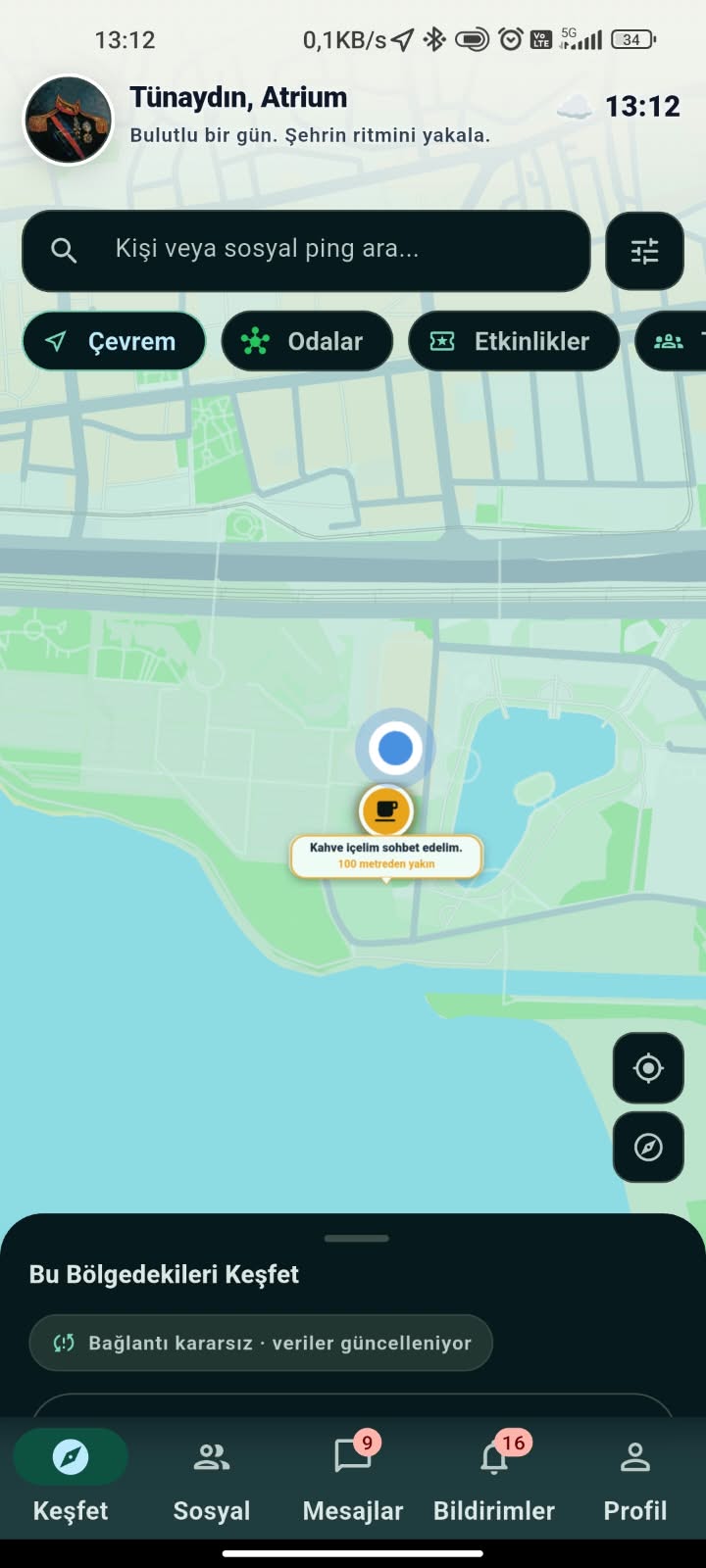
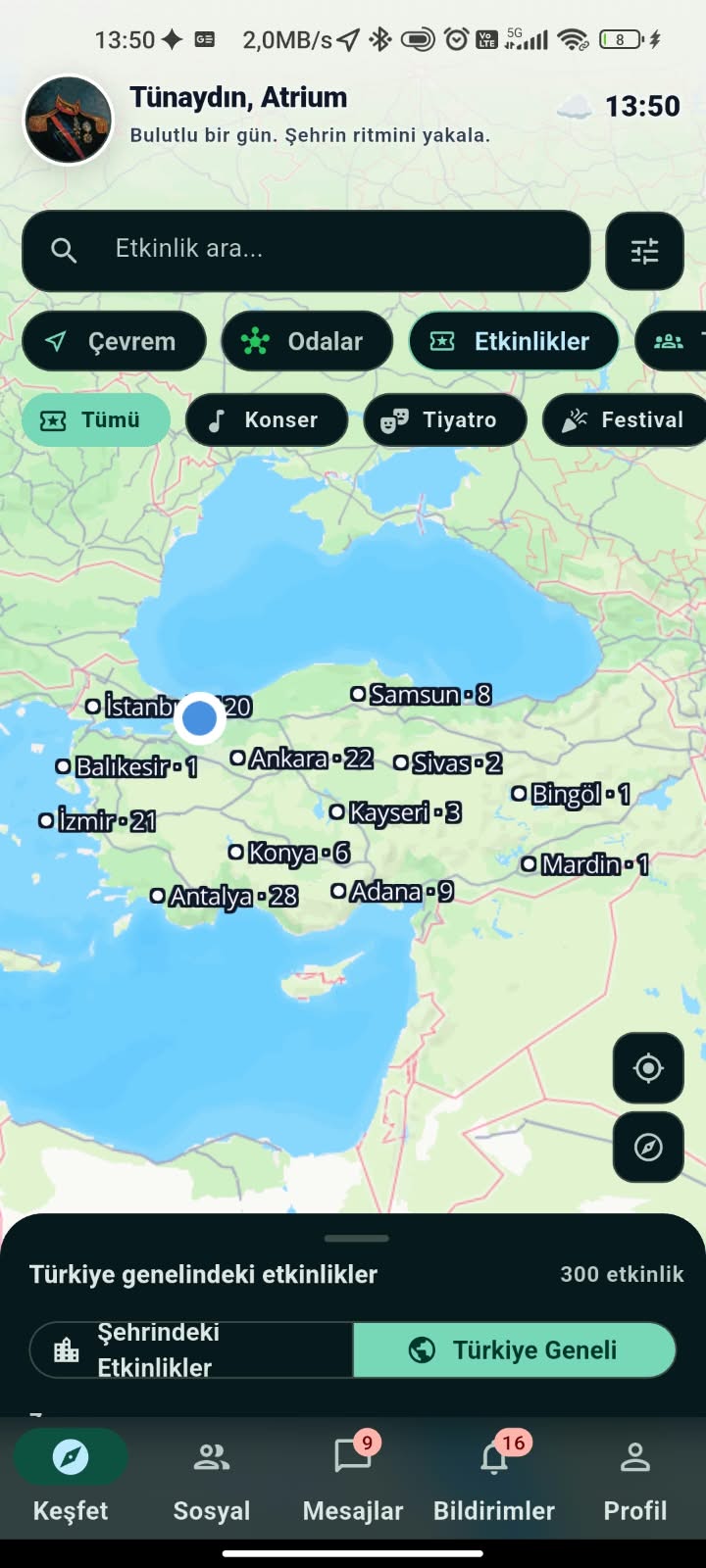
Find an activity in city or broader discovery.
ATRIUM / Events
More than a poster. A plan you could take part in.
Events connect what is happening, when and where it takes place, and who is organizing it. Move from seeing an announcement to making an informed participation decision.
Working MVP · Preparing for controlled beta
CONTROL THE SCENARIO
From a beginning to the next step.
Illustrative flow · No live users or transactions.
11 sections in this guide
01
Finding a suitable event takes more than a list.
A city can have many events without making the right choice obvious. Interests, time, travel and participation conditions matter together. Atrium aims to combine event discovery with local social context, including the community or venue around an activity.
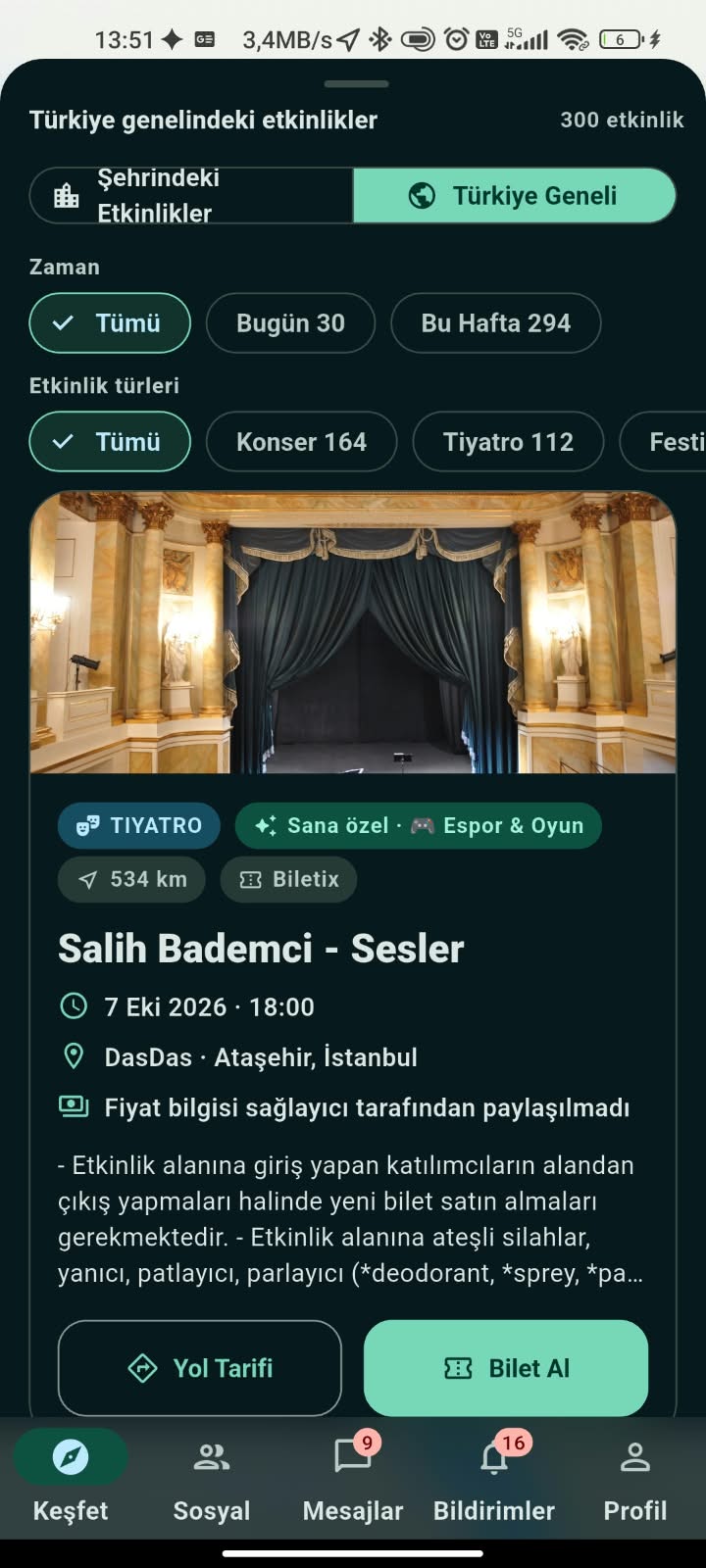
MVP captures include city and Türkiye-wide discovery plus event details. Discovery presents options; details support a specific decision. Activities in captures are demo content rather than current listings, and this page is not a live calendar service.
02
Details sit at the centre of the decision.
A title and image can spark interest. Description, time, venue and organizer context support the next step. A workshop and an outdoor walk require different preparation. Costs, provider links and conditions should be understandable rather than inferred from polished presentation.
A first-time visitor may want to know whether this is a recurring community gathering or a one-off activity. Community and organizer information extends the context. Linking modules makes relevant information available without duplicating the same text everywhere.
03
Venue and travel make a plan practical.
An interesting event still needs a practical meeting point and travel plan. MVP details include venue and directions context. Atrium does not operate the journey or control every external map condition; review the address and organizer's current information.
A hosting business profile may add hours, services and useful venue context. Reviewing it is still different from registering for the event. Viewing a venue, opening directions, expressing interest and attending are separate actions and should remain separate measurements.
04
Understand what an external ticket link means.
Event details can link to an external ticket provider. That does not mean Atrium sells tickets, takes payment or manages refunds. Prices, capacity, cancellation and provider conditions need review on the external service.
A free event may still have membership, organizer or venue conditions. This page does not imply a universal registration protocol for every activity. Follow the event's own explanation and participation route; the web demo does not process bookings or payments.
05
An announcement depends on organization.
Organizers need more than a good title. They prepare time and place, explain expectations and keep information current. Community-event source includes drafts, creation and participation-management flows. Their existence does not mean every operational task is automated.
Knowing the organizer's role helps participants direct questions appropriately. Venue matters may belong to a business; programme questions to the organizer. Atrium connects these contexts, while the organizer page explores the journey from a first announcement to recurring gatherings.
06
Discovering a ceramics workshop.
Imagine someone considering a ceramics workshop for the weekend. They review time, venue, intended participants and preparation, then follow any external registration conditions. This information chain supports a better decision than a photograph alone.
Afterwards, the person may want to continue through a community or may simply value the one activity. Repeat participation is a research question rather than a claimed outcome. The workshop scenario is illustrative, not an Atrium-organized or verified event.
07
From an MVP to recurring local participation.
The current screens show discovery and detail context. Pilot learning should examine whether that information helps decisions, what is missing, where people leave and whether local supply is useful. Opening a card is very different from attending.
A micro-region needs both interested people and clear, current options from communities, businesses and organizers. The product aims to support that relationship without guaranteeing attendance, tickets or sales. Continue through the organizer or individual guide according to your role.
08
Which information helps compare two activities?
Similar titles can describe a one-off workshop or a recurring group's gathering. Time and travel may fit while expectations differ. Read description, organizer and venue together. Images create interest but should not carry the entire decision.
The aim is not one universally best recommendation. Trying a new topic and returning to a familiar group imply different preferences. Discovery offers options while details, community and venue information support personal reasoning.
09
Date, duration and freshness are different questions.
Date affects availability, a programme helps explain commitment, and freshness concerns whether details remain valid. These deserve clear information rather than one badge. Review relevant details before attending because organizer or external-provider conditions can change.
Missing or outdated information can create extra questions and mismatched expectations. Connecting event, community and venue context aims to help, without promising automatic synchronization with every external service.
10
A useful description for a first-time participant.
Newcomers may need to know whether an activity suits beginners, requires membership or needs preparation. Descriptions should help evaluate fit rather than pressure attendance, and organizers should make question routes clear.
A photography walk may need a clear meeting point; ceramics may need preparation information; a book discussion may need the chosen book and approach. The value of details comes from answering the right questions rather than adding length alone.
11
Connection after an activity.
A relevant community can support discussion or future gatherings, but interest in one activity should not silently create every membership. Continuing the relationship remains a personal decision, with clear transitions and permissions.
Pilot learning should distinguish returning to a community, considering another event and finding venue information useful. Separate outcomes reveal useful product parts more clearly than one inflated engagement measure.
ABOUT THIS MODULE
A few useful answers.
Does Atrium sell tickets?
This scope describes links to external providers, not in-app ticket sales or payment.
Can I attend events shown on this website?
Captures and scenarios demonstrate the product; they are not live listings or open invitations.
THE NEXT STEP
Be part of the life around you.
Start a connectionWorking MVP · Preparing for controlled beta · Contact us about participation and collaboration.